
One of East Coast’s largest data centers accused of ‘violating federal law'
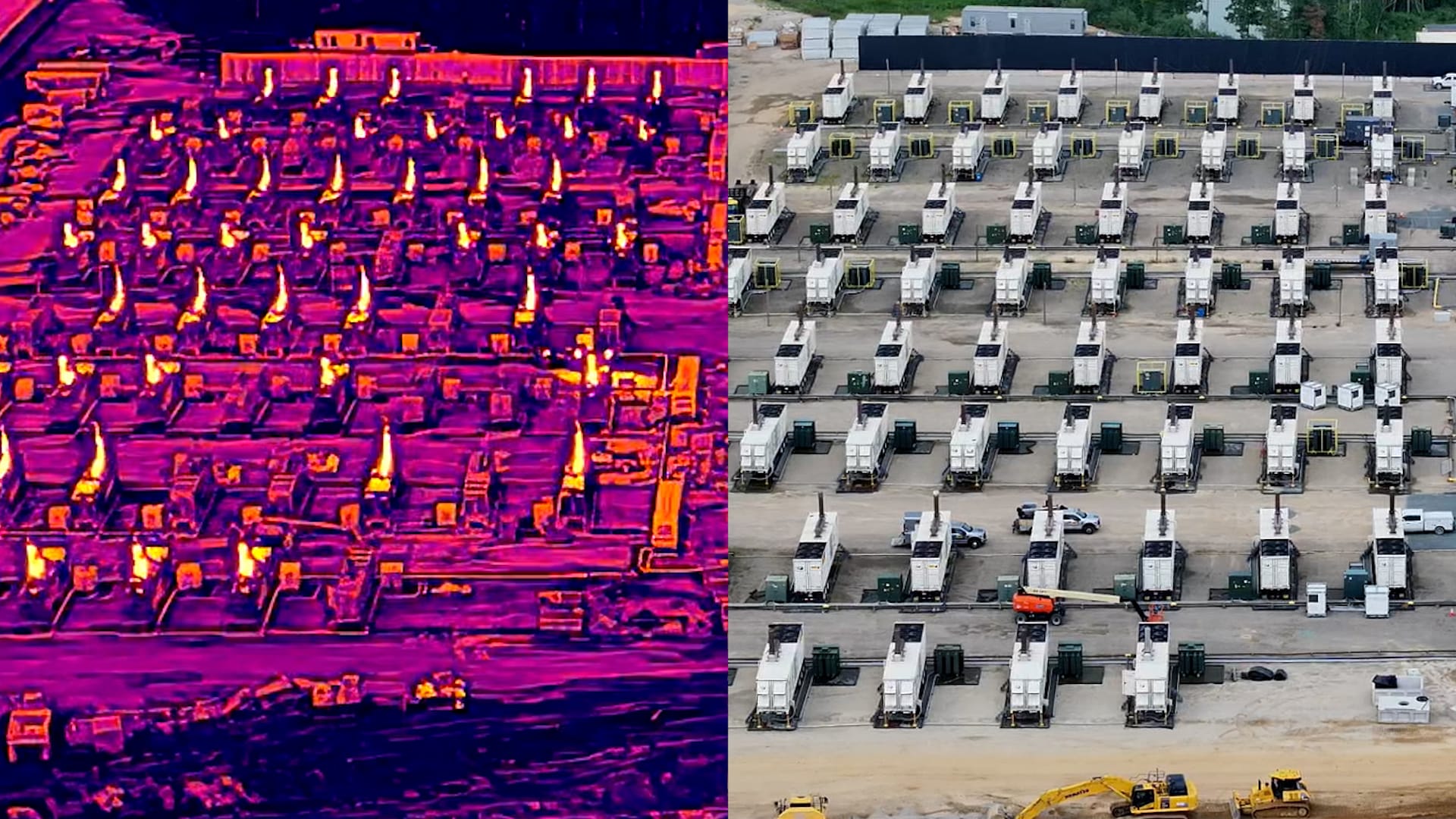
Thermal drone footage shows DataOne — the Microsoft-backed AI data center in Vineland — is powering its operations with dozens of unpermitted generators

This article was produced in partnership between Floodlight and The Guardian. Republished by The Jersey Vindicator.
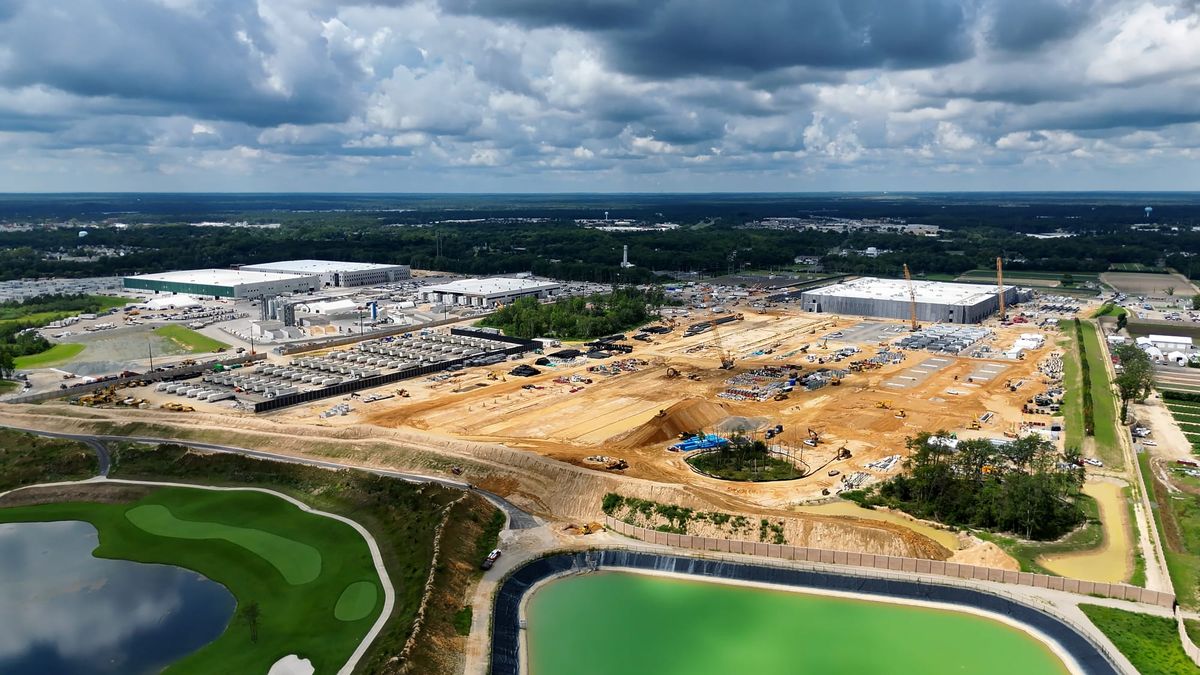
VINELAND, N.J. — The largest planned AI data center in New Jersey is being accused of violating federal law after a Floodlight visual investigation found the site running dozens of unpermitted gas-powered generators.
Thermal drone footage we captured last week showed the partly completed DataOne facility in Vineland was operating at least 45 of the site's 62 generators at the time.
DataOne has stirred controversy since breaking ground in 2025 due to persistent noise complaints, unpermitted construction and a contentious zoning process. It's located about 40 miles outside Philadelphia and slated to provide AI computing power to Microsoft as part of a $17-billion deal with Nebius, a Dutch AI infrastructure giant.
Located roughly a mile from two schools, the tractor-trailer-size generators emit substantial amounts of health-harming air pollution linked to asthma, heart attacks and even premature death.
None have permits.
Thermal drone footage of the DataOne facility in Vineland, New Jersey, shows at least 45 of the AI data center’s 62 unpermitted generators were in operation this month. (Evan Simon / Floodlight)
Federal and state law requires DataOne “to have a final permit before bringing those generators onsite, and certainly before firing them up,” former EPA air enforcement chief Bruce Buckheit told Floodlight.
Buckheit, who served under multiple Republican administrations, believes DataOne’s activities do “violate federal law” and that the company should immediately stop operating the generators and pay a fine for “their illegal emissions.”
A New Jersey Department of Environmental Protection spokesperson confirmed that the agency “has issued no permits, nor are any permit applications under review for power generators at the DataOne facility in Vineland.”
The spokesperson said the agency noticed the generators during a site inspection on July 29 and has yet to make “a full compliance determination.” They declined to answer follow-up questions.
Buckheit said “that one might be seeing administrative enforcement action [soon].”
DataOne did not respond to questions regarding its unpermitted generators but said the company “remains committed to meeting all applicable environmental and permitting requirements.”
Nebius did not respond to requests for comment by publication. Microsoft declined to comment. The Environmental Protection Agency told Floodlight, after being presented with its findings, that New Jersey’s regulators are responsible for air permitting over DataOne.
DataOne is the first data center in New Jersey seeking to build its own power plant.
The controversial tactic was pioneered by Elon Musk’s data centers along the Tennessee and Mississippi border and has since gone mainstream: Nationwide, nearly 60 data centers are planning to build their own gas plants, according to research by energy analytics firm Cleanview.
The “bring your own power” strategy has resulted in yearslong backlogs for gas-powered turbines, with facilities increasingly turning to even less conventional energy sources, such as modified jet engines and portable generators.
In Vineland, DataOne originally submitted a permit application for more than 30 Bergen gas-burning engines, which are commonly used to propel cruise ships. NJDEP, however, found multiple deficiencies in DataOne’s air permit application for the engines, according to public records reviewed by Floodlight.
DataOne withdrew the application in May and instead now plans to rely on an array of Bloom fuel cells capable of producing 300 megawatts. Though powered by gas, fuel cells use a combustion-free electrochemical process to generate electricity and result in far less health-harming air pollution than Bergen engines.
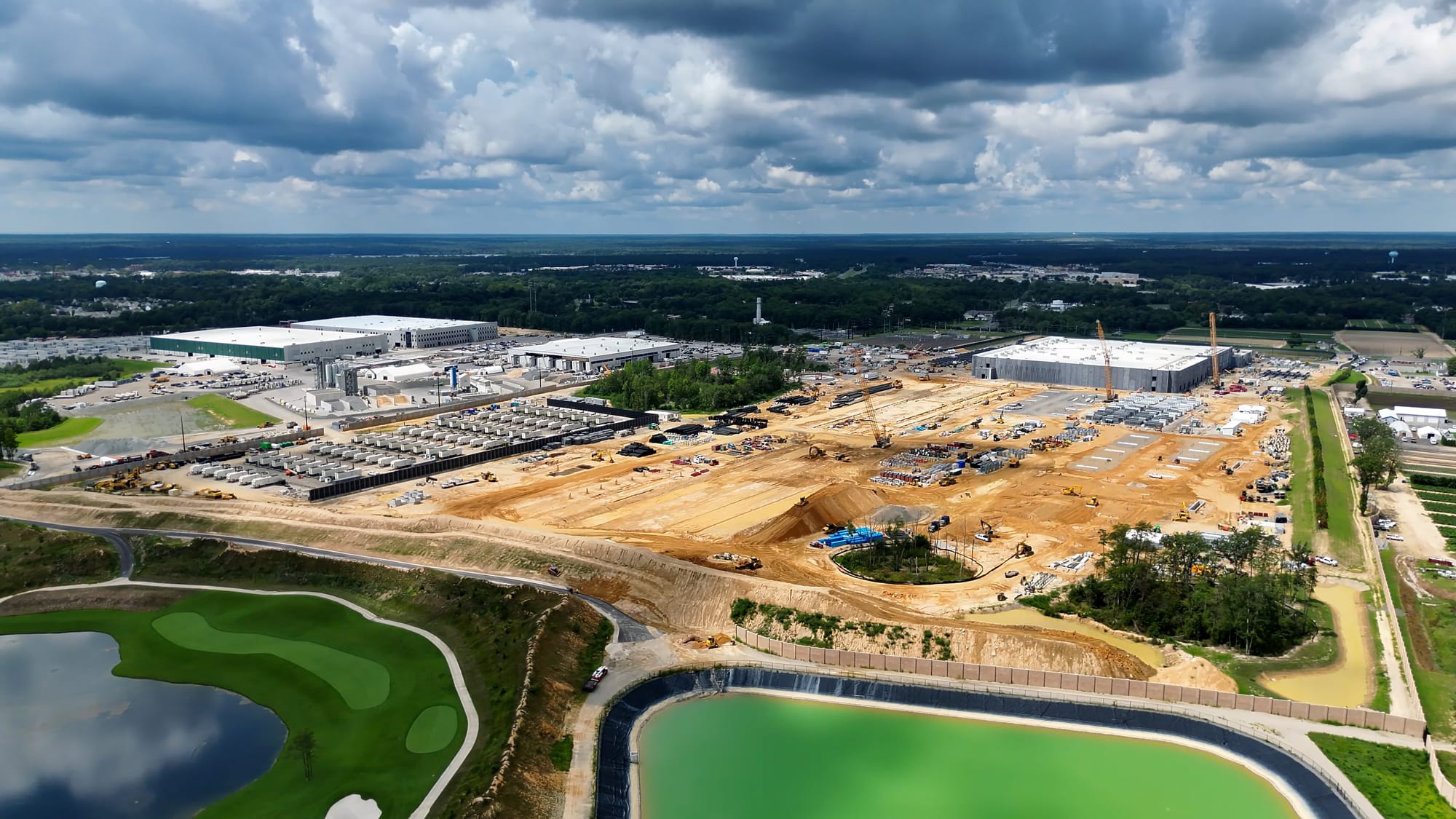
However, the fuel cells still produce large amounts of carbon dioxide, and a Bloom official testified at a planning board meeting that if completed, they could emit more than 2 billion pounds of the climate-warming gas every year.
Until the fuel cells are operational, however, the facility is relying on the unpermitted gas generators, the first of which appear to have been turned on in October, according to maintenance logs.
It’s unclear how long the equipment has been operational, but thermal drone footage captured by a data intelligence company appears to show 25 of the unpermitted gas generators operating in late June.
Local residents have complained of a pervasive humming noise coming from the data center for months, sparking a lawsuit in New Jersey state court over noise pollution that many suspect is linked to the generators. Andrew and Stevi Groetsch live less than a mile from the site and say the noise has awoken them in the middle of the night and often disturbs bedtime stories with their kids.
“It's just constant. It never goes away,” Andrew Groetsch said. The couple has complained about the noise since November and hope NJDEP, the county and the EPA will “at least get that part of it shut down and put a closer eye” on the rest of the project.
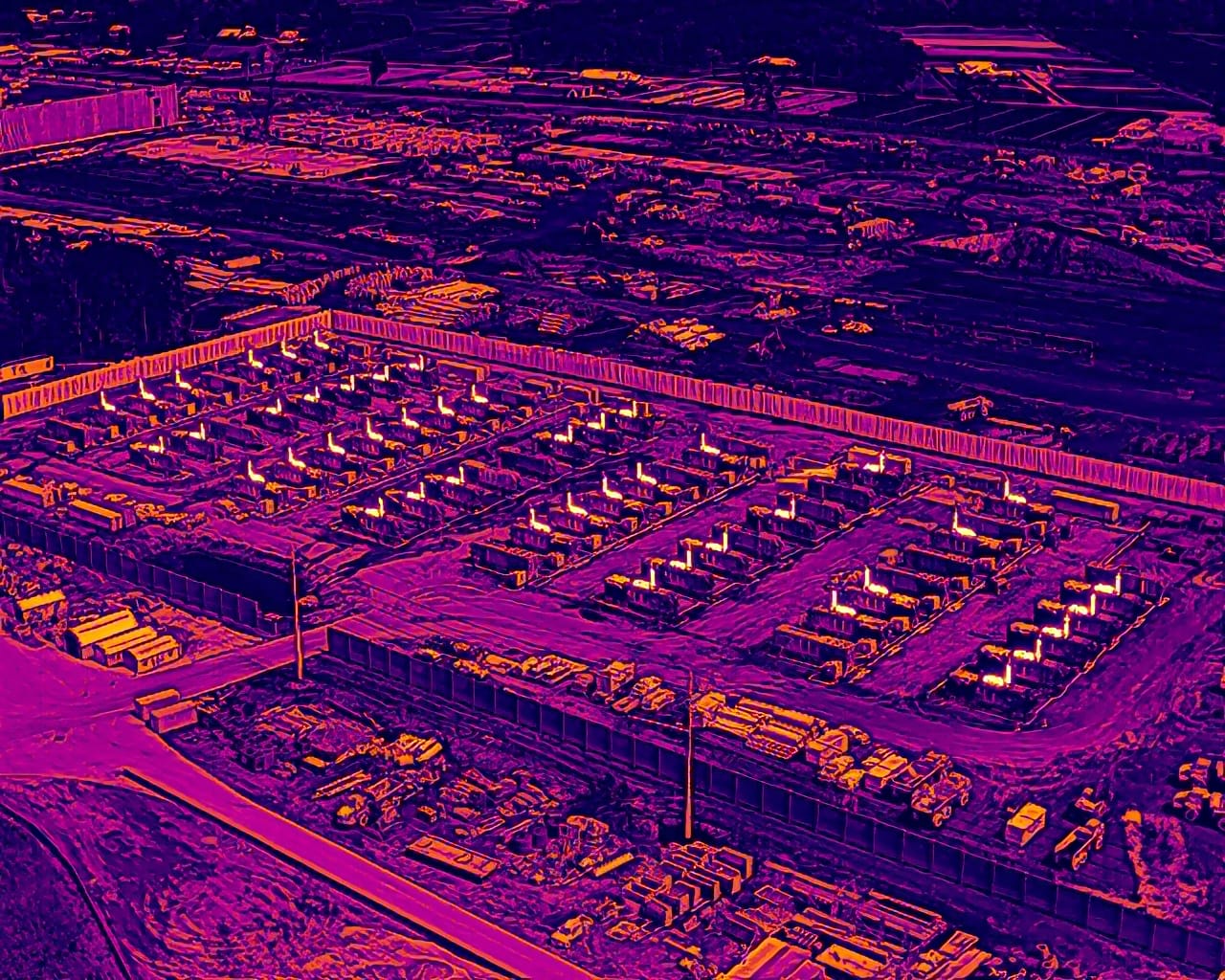
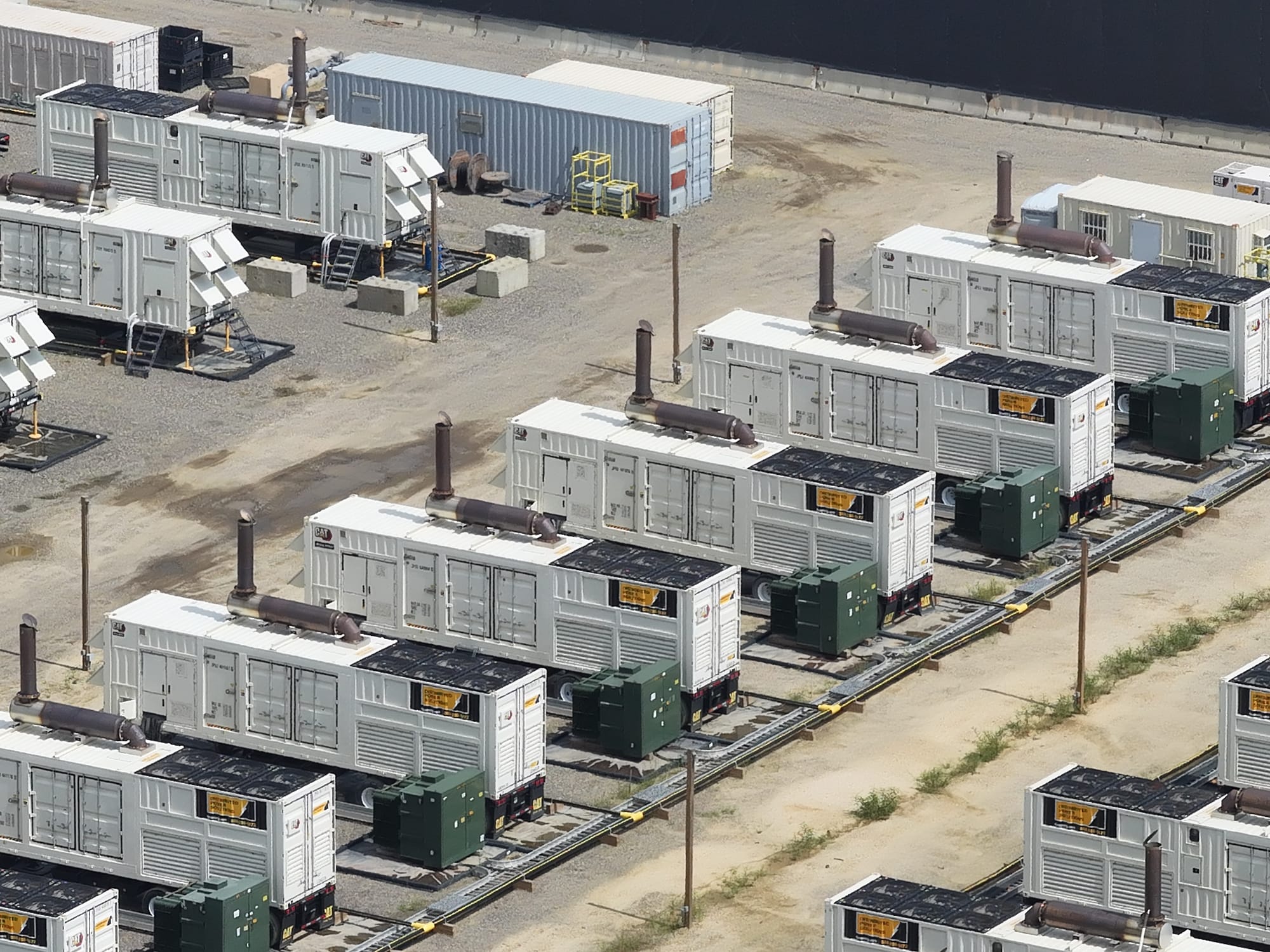
Thermal imagery shows at least 45 of the 62 generators were operating in mid-August 2026. A NJDEP spokesperson confirmed that the agency “has issued no permits, nor are any permit applications under review for power generators at the DataOne facility in Vineland.” (Evan Simon / Floodlight)
“If you don't follow one rule, what makes us have any reason to believe that you would then follow others?” Stevi Groetsch asked. “It’s so upsetting.”
If the DEP decides to issue an enforcement action over the unpermitted generators, it wouldn’t be the first time New Jersey officials have cited DataOne for violations.
A lawsuit brought by local residents alleges that the Cumberland County Department of Public Health cited DataOne for violating noise ordinances for nighttime sound levels at the site in March. Earlier this month, the City of Vineland issued two stop work orders, including for moving the fuel cells onsite without permission — the same fuel cells meant to eventually replace the unpermitted generators.
“It seems that this industry, in particular, values speed to market more than almost anything else,” Buckheit said. He suspects the company won’t stop operating the generators until they are issued a stop work order because they “seem to believe that it's better to ask for forgiveness than for permission.”
Help us keep flying.
Thermal imaging is how we’ve caught data centers running unpermitted equipment in two states. Until now, we’ve rented the camera for every flight.
We finally bought our own. It means we can fly when a story calls for it, not just when we’ve budgeted for it. It’s a significant expense for a newsroom our size.
Will you chip in to help us pay for it?
Floodlight is a nonprofit newsroom. We don’t run ads and we don’t charge for our reporting. We share it freely with newsrooms across the country, and our thermal visuals are turning up in local news coverage, legal filings and even museum exhibits.
Fund these flightsEvan Simon is an investigative producer at Floodlight. A Peabody Award nominee and the winner of two National Emmy Awards, Evan leads Floodlight’s visual and video-based storytelling.